Is Traore the answer for Africa?
Ghanaian socialist Gyekye Tanoh spoke at Marxism Festival earlier this month about Burkina Faso’s leader and the shape of resistance to Western imperialism on the continent
By Gyekye Tanoh Monday 14 July 2025 Issue 2964
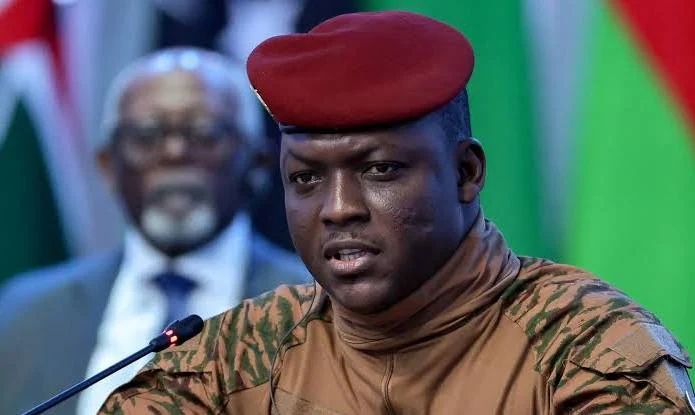
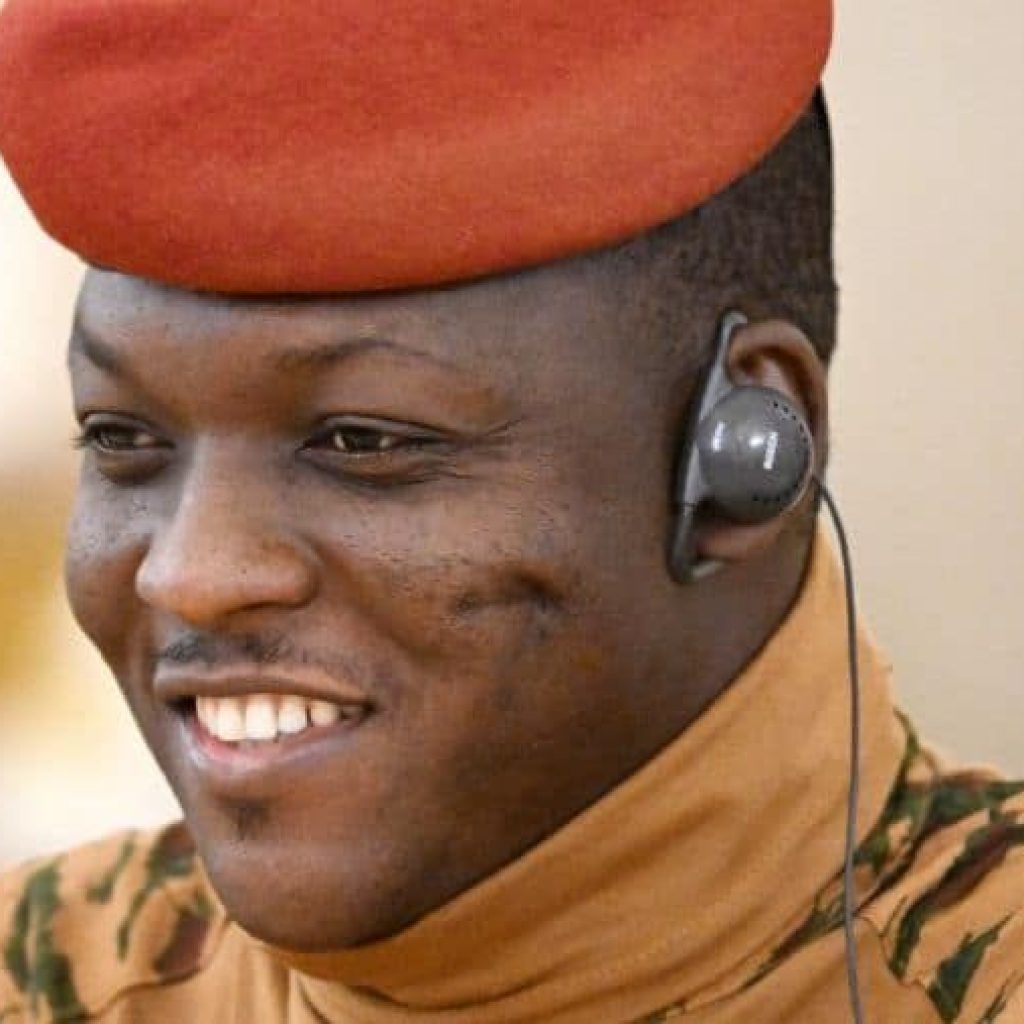
Ibrahim Traore wearing military uniform and red beret Traore is a young military officer who has been president of Burkina Faso since 2022 (image: wikicommons)1
Burkina Faso and west Africa are treated by world powers as remote outposts of the global system.
It is where you find occasional famines, dystopian societies and dictatorships, they say.But people around the world are interested and excited by this supposedly remote region and by the country’s president, Ibrahim Traore. It reflects that there is a crisis of imperialism and a yearning for resistance that animates activism internationally.
In April, the head of the United States Africa Command announced to the US congress that Traore was one of the top enemies of Western interests. It warned that Burkina Faso and the wider Sahel region are the new frontline of global terrorism.
A few weeks later, there was an attempted coup in Burkina Faso. The attempt to assassinate Traore sparked international solidarity protests.Burkina Faso has a thriving tradition of democratic resistance.
Dictator Blaise Compaore was removed from office in 2014 by a phenomenal mass uprising.But when Compaore was deposed, the state he built remained in force. The specialist army unit, that had been the backbone of his own defence and the instrument of repression, stayed intact. In 2015, that unit attempted a counter-coup.
Once again there was a mass uprising. In these conditions the first elected government of Burkina Faso since the independent government of 1960, came to power.That government pushed austerity and increased instability. Popular uprisings against it began around 2019. It’s in this context that there was another coup in 2022.There’s a pattern here.
These are popular uprisings, rooted in ordinary people. But they do not have an agenda of power of their own or an agenda of organising different type of state.In January 2022, commanders took power but they were forced to incorporate junior officers who had led protests across the country.
One such junior officer was Traore.African Liberation Day is celebrated on 25 May. This year’s commemorations were notable for how much and how often across Africa liberation was associated with Traore.This shows that a new generation is developing consciousness and identifying imperialism as an enemy.
They are not doing so simply on the level of discussion, it involves street politics. This is challenging sections of the ruling class and their collaboration with imperial powers.There is the growing sense that states across Africa have failed young people, the peasantry, the urban poor and the working classes.
We see that in the recent “Gen Z” protests in Kenya.The notion of state failure, and resistance to it, is what the left and right are mapping onto. That is what Traore represents.French colonial capitalism treated the people of the Sahel region, the area bordering the Sahara desert, as a reserve labour army, to be controlled with brutal force.In Burkina Faso the French used tribal chiefs, and ethnic and religious ties to deny people basic rights. They institutionalised a hierarchy of rights—access to land, for example, is still highly gendered and ethnicised.
There has been a renewed intervention of Western military powers in west Africa since the Arab Spring of 2011. In 2013 France sent troops into Mali to try to contain a revolt against the government of the time.The French and other Nato powers were always interested in fighting this war on the cheap. Therefore they constantly looked for allies in the area. This meant weaponising ethnic and religious interests.
The region is now seen as one of the hot spots of global imperial competition. Large numbers of people are realising that the Western imperialist powers are the source of the problem.The discrediting of France, Nato and other Western powers has turned some towards Russia and China. And Traore is among those who have sought closer links to Russia.Three military governments in Burkina Faso, Mali and Niger are now coming together in what they call the Alliance of Sahel States.
They have made inroads in deploying resources nationally, claiming greater national shares of mining and other industries.In other words, they talk and act as if they are driven by anti-imperialism. But the way in which they came to power does not reflect this.The crisis of French imperialism is now expressed by the expulsion of French troops from the Sahel states.
France has been withdrawing its troops. But it is rethinking how to sustain its presence there without the constant explosiveness of a direct military presence. It has confidence in sections of the ruling class and the military in the region to guarantee French capitalist interests.Imperialism is not simply about military force or about domination. It is a system of competition. And that is why it is an impulse in every single ruling class in the world—including those of the poorest countries.
We live in a multipolar world where powers such as China are starting to rival Western imperialism. In this context the interrelationship between different states in the region needs to be understood.Burkina Faso is a site of imperial power play. And people see multipolarity as offering weak states a way out. But multipolarity represents an intensification of imperial conflict.
The original scramble for Africa took place in the 1880s because new powers were coming to confront the established powers. That moment of multipolarity was not resolved through diplomacy. It was reorientated through the brutality of the First World War.
We also need to not back away from a critique of some of Traore’s policies within Burkina Faso itself. People compare Traore to Thomas Sankara, the revolutionary president of Burkina Faso until his assassination in 1987.Whatever you say about Sankara, there were elements of his politics that looked at shifting the balance in society between those who produce wealth and those who take the wealth off them. There is nothing of the sort going on in Burkina Faso today.You cannot fight for democracy without fighting for other rights.
In Britain, we have the government saying Palestine Action are terrorists and ramping up authoritarianism—and we’d all agree that is a bad thing.So why do we stay silent when the leaders of democratic movements and trade unions in Burkina Faso are being abducted and tortured?LGBT+ people in Burkina Faso are of course oppressed. But the country did not inherit laws against homosexuality from the colonial powers in the way that some other African countries did.Now there is a cultural resuscitation of homophobia and Traore wants to bring in oppressive laws. I don’t know where the idea comes from that this is somehow anti-imperialist.
The African ruling class is building deals that will ensure greater stabilisation for transnational companies. Traore makes deals with the International Monetary Fund. The IMF announced in April this year that they had reached an agreement with the Burkinabe authorities. So Traore has not severed his ties with global capitalism.If there is a crisis of imperialism, it is in the fact that there are new insurgent forces who are looking to assert their political sovereignty in their own terms.They’re rejecting the state but there is a paradox.
By looking to figures like Traore as agents of change, you are in fact saying that there are sections of the state and the ruling class that offer the way forward.Those who support Traore call themselves and him revolutionary. But we must be able to conceive of a democracy that is higher and better than liberal democracy and the state failures that we are seeing now in Africa.We have to look at different visions of participatory democracy, such as the resistance committees in Sudan.
The power of working people is central.Class politics, through workers’ own institutions, must be brought back to the heart of the discussion. We ought to engage with activists in any way possible, while understanding that revolutionary socialists have something valuable to deepen discussions and to strengthen the movement.Currently, the critique of what should replace the regimes and imperialism is incomplete.
That is why people are projecting their ambitions onto the likes of Russia and figures like Traore without a strategic perspective of where the movement should go, elements of the discredited ruling class can recycle themselves back into favour.We will always support any war against French imperialism, but we must argue that Traore and others within the African ruling class are not a solution.Instead, we need to join together in struggle internationally and make demands of Traore and make demands in solidarity with the workers of Burkina Faso.
Above all, it is part of the constant conviction that through these struggles we build a fighting power that can break capitalism.