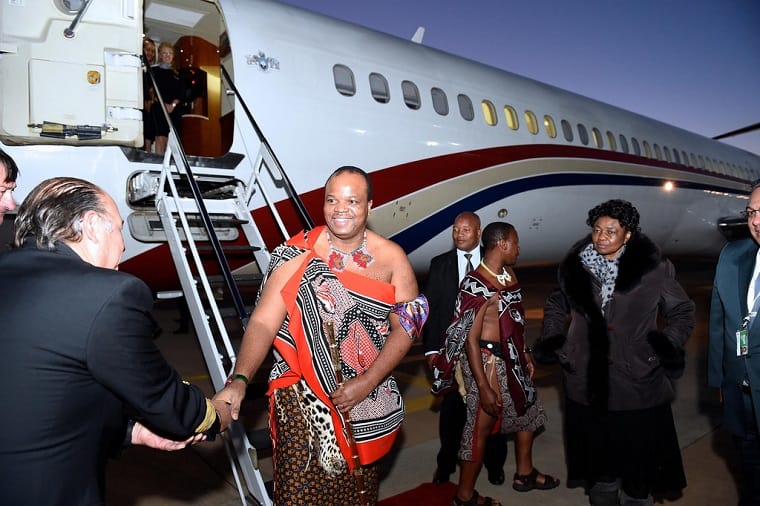
A King Unfit to Govern: Unmasking Eswatini’s Cashflow Crisis
UNMASKING ESWATINI’S CASHFLOW CRISIS
By Mandla Mthethwa
Delayed salary payments for government employees in Eswatini are not new, they’re just becoming more frequent. Since as far back as 2012, the country has shown clear signs of poor fiscal discipline.At the centre of this black hole is none other than King Mswati III, the playboy monarch who treats the national treasury as his personal wallet.
A few decades ago, Korean Airlines was one of the most unsafe airlines in the world. Its crash record was so alarming that several airports around the world banned it. In desperation, the airline hired an American consultant to diagnose the problem. What he discovered was astonishing: the issue wasn’t the planes, the routes, or even the pilots’ skill. It was culture. Korean society, like ours, was built on deep respect for authority – too much respect. Junior officers were so afraid to contradict their superiors that they would rather die than correct them.
A recording from one of the doomed flights captures this tragic flaw. The co-pilot realized the captain had missed the airport and was heading straight for the mountains. But instead of saying, “Captain, you’ve made a mistake, we’re off course,” he tried to hint politely: “It rains a lot around here, Sir.” The captain, not catching on, replied, “It certainly does.” Moments later, 200 people were dead.
IT RAINS A LOT IN MBABANE
Eswatini is a mirror image of that story. We too are trapped in a culture with a dangerously high power differential. In simple terms, a power-differential means that those at the top hold all the power, and those below them are too scared to question or challenge it. The bigger the gap, the more dangerous it becomes. In Eswatini, this fear of speaking up is dressed in cultural respect and called inhlonipho. But real respect doesn’t mean silence in the face of wrongdoing. It doesn’t mean watching the driver steer the bus into a cliff because he’s “the boss”.
Our obsession with inhlonipho has become a national disease, a polite suicide pact that prevents anyone from telling the King: “Uyidla kakhulu imali yesive, sale ukhawula.” [You are spending too much of the people’s money, please stop.] Of course, this isn’t only about culture.
King Mswati III is simply unfit to govern. He is petty, vindictive, and completely out of touch with the suffering of his people. Anyone who dares to speak truth to him is banished, silenced, or crushed. As a result, he now rules surrounded by a circle of sycophants: greedy men and women who compete to flatter him, not to serve the nation. They whisper what he wants to hear, not what he needs to know.
WHEN SALARIES ARE DELAYED
For the first time in over a decade, civil servants are waiting for their salaries. Even the armed forces – usually paid first – have been told to wait. Their much-publicized salary increases will not be reflected this month. This delay is not a “technical glitch”. It is a symptom of a government running out of cash. The wage bill now far exceeds the revenue collected through PAYE taxes: the same taxes paid by struggling private workers.
Whenever SACU revenues arrive, the King’s priorities take center stage: luxury trips abroad, extravagant shopping sprees for his many wives, or E100 million birthday celebrations, in a country where 70% of citizens live in abject poverty.
Perhaps the King should hire a Korean cockpit crew to fly his private jet, at least they know what happens when nobody dares to correct the boss.
(published 27 October 2025 – The Swati Vanguard)